Components of DBMS and Architecture
Database architecture defines how a database is structured, stored, managed, and accessed. The architecture provides different views to different users and handles the complexity of physical storage while presenting a simple logical view. Understanding this layered architecture and the components of DBMS is fundamental to designing scalable, maintainable database systems.
The Basics
A database system is divided into modules that deal with different responsibilities. The overall system structure consists of various components that interact to provide the database services.
Three-Schema Architecture (ANSI-SPARC)
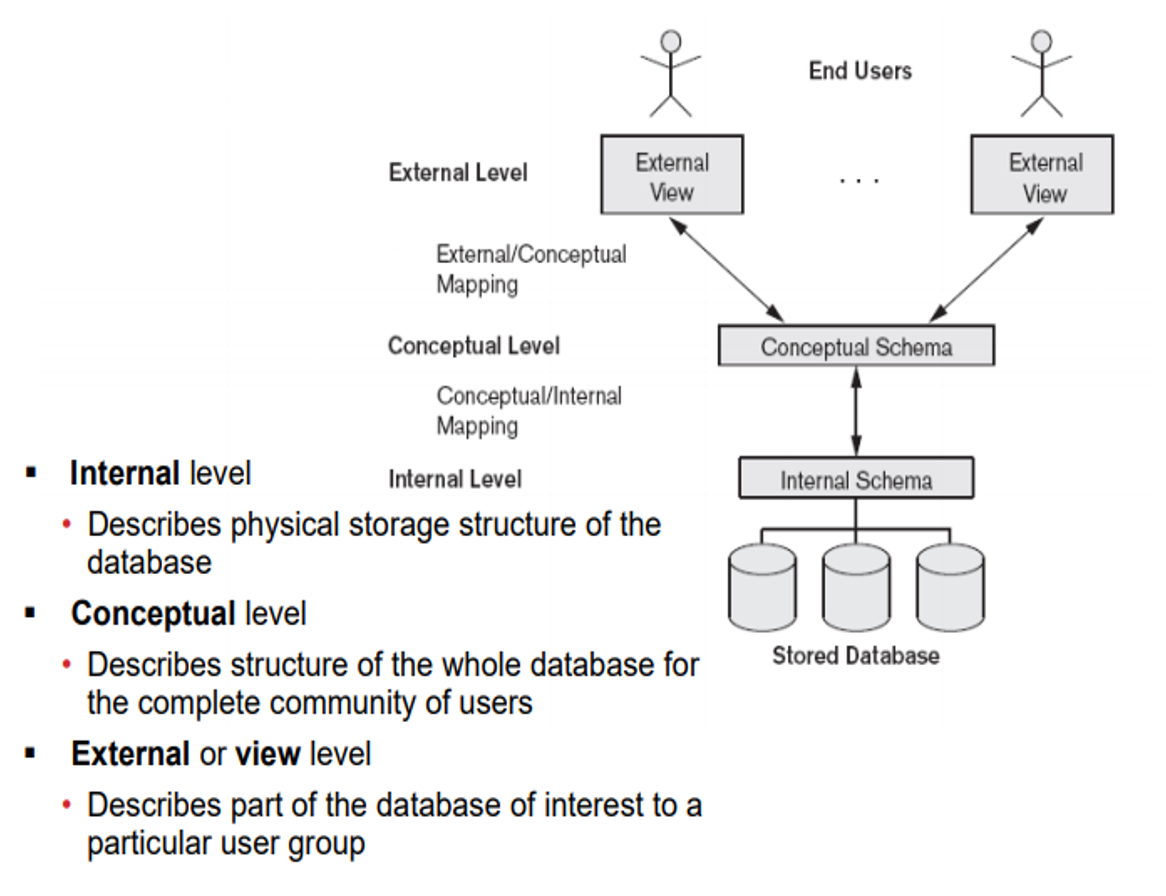
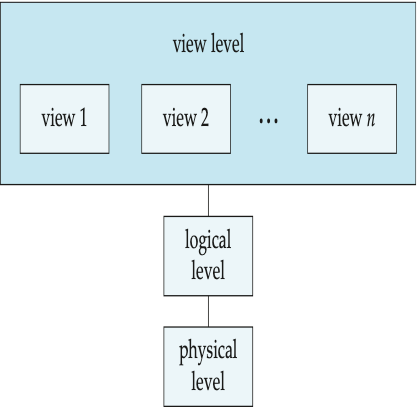
The three-schema architecture separates user applications from the physical database through three levels of abstraction:
-
EXTERNAL LEVEL (View Level):
• Highest level of abstraction
• Describes WHAT data is seen by individual users
• Multiple external schemas (views) exist
• Each view describes the portion of database relevant to a particular user group -
CONCEPTUAL LEVEL (Logical Level):
• Community view of the database
• Describes WHAT data is stored and relationships among data
• Single conceptual schema for entire database
• Focus on entities, data types, relationships, constraints -
INTERNAL LEVEL (Physical Level):
• Lowest level of abstraction
• Describes HOW data is physically stored
• Deals with: Storage structures, indexes, access paths, file organization
Data Independence
The capacity to change schema at one level without affecting schema at the next higher level.
-
LOGICAL DATA INDEPENDENCE:
• Ability to change conceptual schema without changing external schemas
• Example: Adding a new table doesn't affect existing views -
PHYSICAL DATA INDEPENDENCE:
• Ability to change internal schema without changing conceptual schema
• Example: Creating an index doesn't affect queries
Technical Details
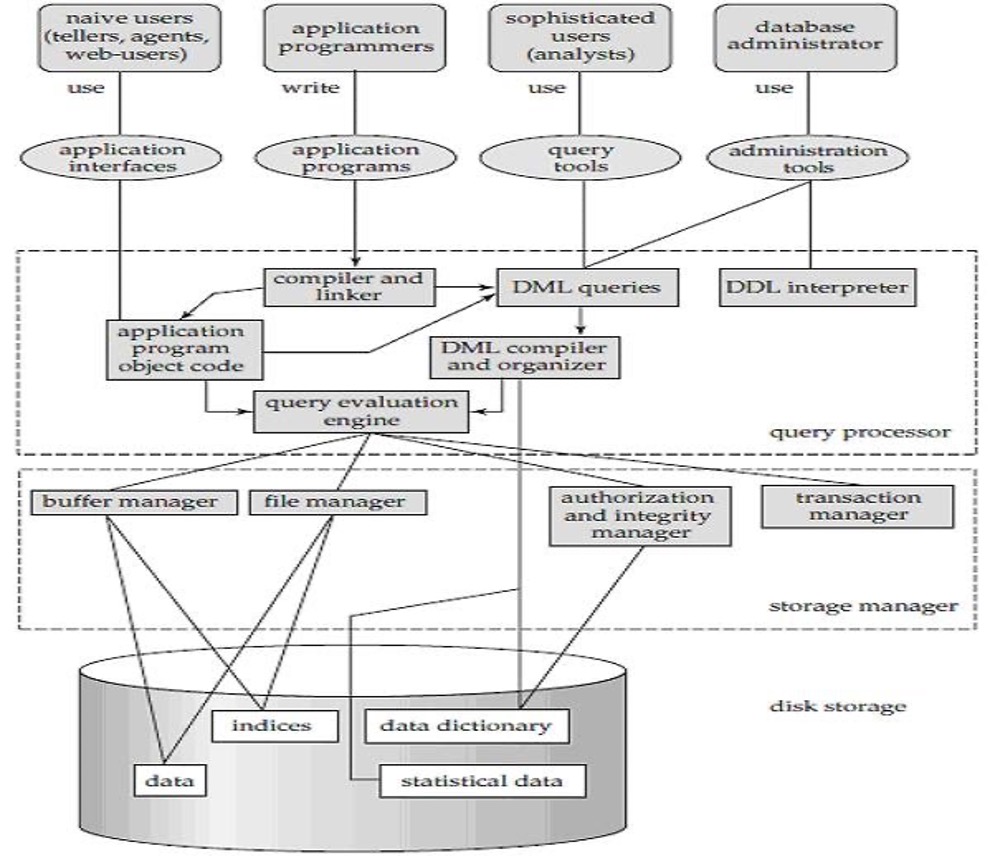
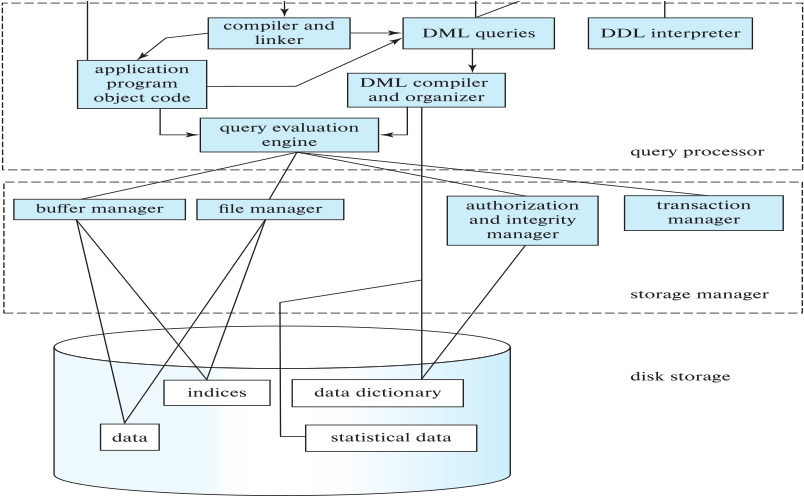
DBMS COMPONENTS:
-
STORAGE MANAGER:
• Interface between low-level data and application programs
• Translates DML statements to low-level file-system commands
• Responsible for: Storing, retrieving, updating dataComponents:
• Authorization and Integrity Manager
• Transaction Manager
• File Manager
• Buffer Manager -
QUERY PROCESSOR:
• Simplifies and facilitates data accessComponents:
• DDL Interpreter: Interprets DDL statements
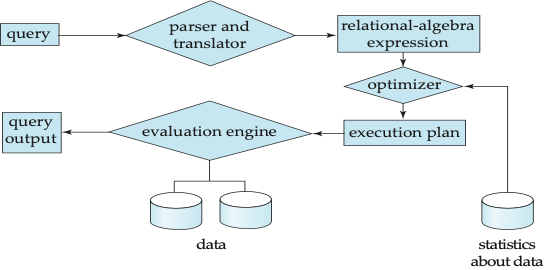
• DML Compiler: Translates DML to query evaluation plan
• Query Optimizer: Chooses lowest-cost evaluation plan
• Query Evaluation Engine: Executes query plan -
DATABASE USERS:
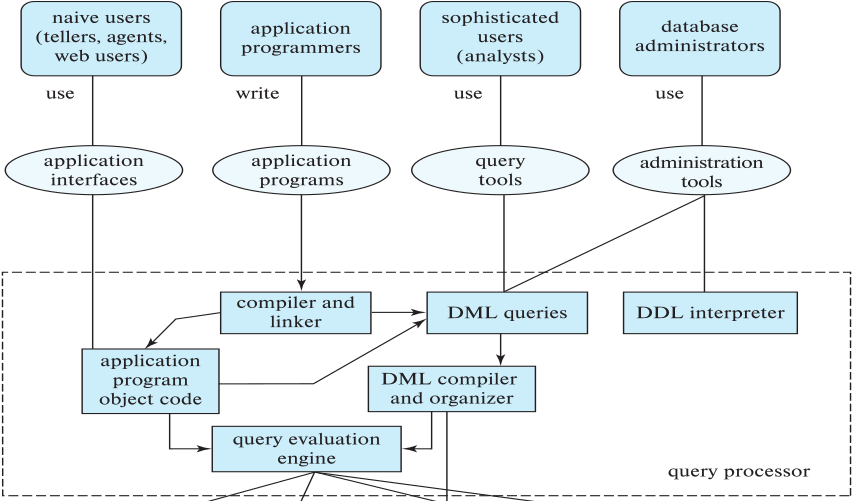
A. Naive Users: Invoke application programs (ATM users, airline booking)
B. Application Programmers: Write application programs using DML
C. Sophisticated Users: Use query tools, don't write programs (analysts)
D. Database Administrator (DBA): Central control over system
- DBA RESPONSIBILITIES:
• Schema definition
• Storage structure and access method definition
• Schema and physical organization modification
• Granting authorization for data access
• Routine maintenance: Backups, performance monitoring, security
CLIENT-SERVER ARCHITECTURE:
Two-Tier Architecture:
• Client: Application program, user interface
• Server: Database system (query processing, transaction management)
• Communication via database protocols (ODBC, JDBC)
Three-Tier Architecture:
• Client: Presentation layer (browser, mobile app)
• Application Server: Business logic layer (web server, API)
• Database Server: Data layer
• Benefits: Scalability, maintainability, security
Examples
EXAMPLE 1: THREE-SCHEMA ARCHITECTURE IN ACTION
Physical Level (Internal):
- Students table stored as heap file
- B-tree index on StudentID
- Data blocks of 8KB size
Logical Level (Conceptual):
CREATE TABLE Students (
StudentID INT PRIMARY KEY,
Name VARCHAR(100),
Email VARCHAR(100),
DepartmentID INT
);
View Level (External):
-- View for admissions office
CREATE VIEW AdmissionView AS
SELECT StudentID, Name, Email
FROM Students;
-- View for academic department
CREATE VIEW DepartmentView AS
SELECT S.Name, S.Email, D.DepartmentName
FROM Students S
JOIN Departments D ON S.DepartmentID = D.DepartmentID;
EXAMPLE 2: DATA INDEPENDENCE
Physical Independence:
-- Original: No index
SELECT * FROM Students WHERE LastName = 'Smith';
-- Slow: Full table scan
-- DBA creates index (physical level change)
CREATE INDEX idx_lastname ON Students(LastName);
-- Same query, now fast!
SELECT * FROM Students WHERE LastName = 'Smith';
-- Application code unchanged, but performance improved!
Logical Independence:
-- DBA adds new column (conceptual level change)
ALTER TABLE Students ADD COLUMN MiddleName VARCHAR(50);
-- Existing view still works
SELECT * FROM AdmissionView;
-- Returns same columns as before, application unaffected
EXAMPLE 3: DBMS COMPONENTS IN ACTION
User Query:
SELECT Name FROM Students WHERE GPA > 3.5;
Processing Flow:
- DML Compiler: Parses query, checks syntax
- Query Optimizer: Chooses execution plan
- Option A: Full table scan
- Option B: Use index on GPA
- Chooses B (lower cost)
- Query Evaluation Engine: Executes plan
- Buffer Manager: Fetches required pages into memory
- File Manager: Reads data from disk
- Result: Returns matching records
EXAMPLE 4: THREE-TIER WEB APPLICATION
Presentation Tier (Frontend):
• React/Angular application
• Displays student list
• User clicks "View Details"
Application Tier (Backend):
• Node.js server receives request
• Validates user permissions
• Queries database
• Formats response as JSON
Database Tier:
• MySQL database
• Executes: SELECT * FROM Students WHERE StudentID = ?
• Returns data to application tier
Real-World Use
IMPLEMENTING DBMS ARCHITECTURE:
- Setting Up Three-Tier Application:
// Application Tier (Node.js + Express)
const express = require('express');
const mysql = require('mysql2/promise');

const app = express();

// Create connection pool (efficient connection management)
const pool = mysql.createPool({
  host: 'localhost',
  user: 'app_user',
  password: 'password',
  database: 'UniversityDB',
  waitForConnections: true,
  connectionLimit: 10
});

// API endpoint
app.get('/api/students/:id', async (req, res) => {
  try {
    const [rows] = await pool.query(
      'SELECT * FROM Students WHERE StudentID = ?',
      [req.params.id]
    );
    res.json(rows[0]);
  } catch (error) {
    res.status(500).json({ error: 'Database error' });
  }
});

app.listen(3000);
- Implementing Views (External Level):
-- Public view: Hide sensitive data
CREATE VIEW PublicStudentInfo AS
SELECT StudentID, Name, Major
FROM Students;
-- Email, SSN hidden

-- Department view: Show department-specific data
CREATE VIEW CSStudents AS
SELECT StudentID, Name, GPA
FROM Students
WHERE Major = 'Computer Science';

-- Grant permissions on views
GRANT SELECT ON PublicStudentInfo TO public_user;
GRANT SELECT ON CSStudents TO cs_department;
- Physical Independence Example:
-- Application uses this query
SELECT * FROM Orders WHERE OrderDate BETWEEN '2024-01-01' AND '2024-12-31';

-- DBA optimizes physical storage (no application changes needed)
CREATE INDEX idx_order_date ON Orders(OrderDate);
-- Or partition table by year
CREATE TABLE Orders_2024 PARTITION OF Orders
FOR VALUES FROM ('2024-01-01') TO ('2024-12-31');
- DBA Daily Tasks:
# Monitor database performance
mysqladmin -u root -p processlist

# Check slow queries
mysql -u root -p -e "SELECT * FROM mysql.slow_log;"

# Backup database
mysqldump -u root -p UniversityDB > backup_$(date +%Y%m%d).sql

# Monitor disk space
df -h /var/lib/mysql

# Analyze table for optimization
mysql -u root -p -e "ANALYZE TABLE Students;"
- Best Practices:
- Use connection pooling (don't create connection per request)
- Implement views for security and simplification
- Create indexes on frequently queried columns
- Separate read-only users from write users
- Monitor query performance regularly
- Document schema changes
- Test backup and recovery procedures
For exams
IMPORTANT EXAM QUESTIONS:
-
Explain the three-schema architecture of DBMS with a neat diagram.
Answer: External (views), Conceptual (logical schema), Internal (physical storage). Draw diagram showing mappings. -
What is data independence? Distinguish between logical and physical data independence with examples.
- Physical: Change index, file organization without affecting applications
- Logical: Change schema without affecting views
-
List and explain the major components of a DBMS.
Components: Storage Manager, Query Processor, Transaction Manager, Buffer Manager, File Manager -
What are the responsibilities of a Database Administrator (DBA)?
Schema definition, access control, backup/recovery, performance tuning, security management -
Explain client-server and three-tier database architectures with diagrams.
Two-tier: Client ↔ Database
Three-tier: Client ↔ Application Server ↔ Database -
How does the query processor work? Explain its components.
DDL Interpreter, DML Compiler, Query Optimizer, Query Evaluation Engine -
Describe the different types of database users.
Naive users, Application programmers, Sophisticated users, DBA -
What is the role of the buffer manager in DBMS?
Manages memory cache, replacement policies, pin/unpin pages -
Explain how mappings between schema levels enable data independence.
External/Conceptual mapping and Conceptual/Internal mapping allow changes at one level without affecting others -
Why is three-tier architecture preferred for web applications?
Scalability, maintainability, security, separation of concerns
QUICK REVISION:
• External Level = User Views
• Conceptual Level = Logical Schema
• Internal Level = Physical Storage
• Physical Independence = Change storage without affecting logic
• Logical Independence = Change schema without affecting views
• DBA = Central manager of database system
• Three-tier = Client, Application Server, Database
Key points
KEY TAKEAWAYS:
✓ Three-Schema Architecture: External (views), Conceptual (logical), Internal (physical)
✓ Data independence allows changes at one level without affecting other levels
✓ Physical data independence: Change storage details without affecting applications
✓ Logical data independence: Change logical schema with minimal impact on views
✓ DBMS Components: Storage Manager, Query Processor, Transaction Manager, Buffer Manager
✓ Query processing: Parse → Optimize → Execute
✓ Database users: Naive users, Application programmers, Sophisticated users, DBA
✓ DBA responsibilities: Schema management, security, backup, performance tuning
✓ Three-tier architecture: Presentation, Application, Database tiers
✓ Benefits of architecture: Scalability, maintainability, security, flexibility
✓ Views provide security by hiding sensitive data and simplifying complex schemas
✓ Buffer manager improves performance by caching frequently accessed data in memory
REMEMBER: The layered architecture and data independence are what make modern databases flexible, maintainable, and able to evolve with changing requirements without requiring application rewrites!